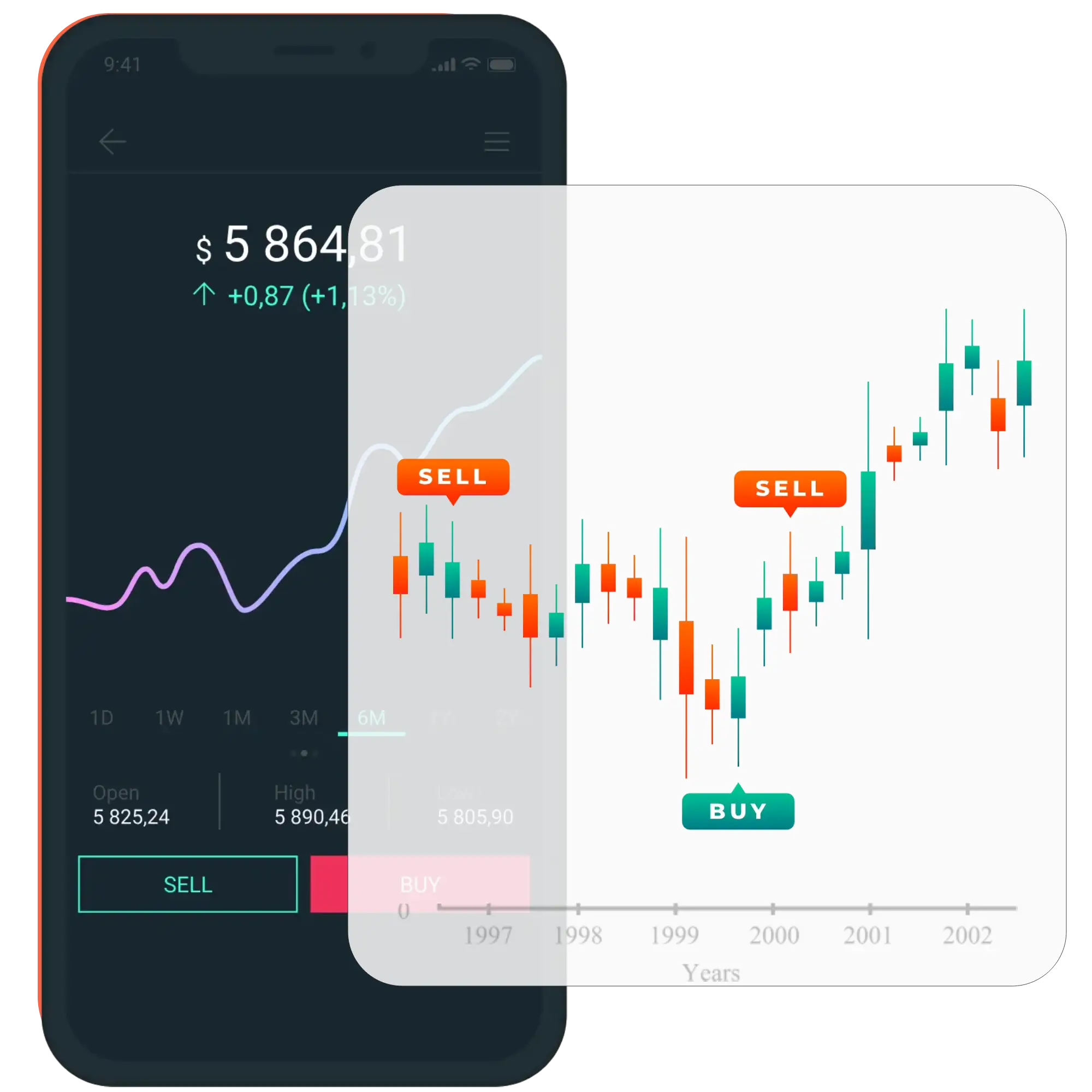

Intraday trading is the art of buying and selling the same instrument on the same trading day. No overnight risk, no waiting for quarterly results, no surprise gap-downs on Monday morning. You enter when the setup forms, exit before the closing bell, and either book a profit or take the loss and move on. Clean.
It also happens to be the most demanding form of trading. You’re competing against people who do this for a living, with faster systems and better data than you. The difference between a profitable intraday trader and a losing one isn’t intelligence — it’s discipline, the right tools, and a tested system. Tradex1.live gives you the tools and the cost structure. The rest is on you. This page is about helping you bring the rest.
Intraday trading — also called day trading — means opening and closing a position within the same market session. If you buy 100 shares of Reliance at 9:30 AM, you must sell them by 3:30 PM the same day. If you don’t square off, the broker will do it automatically near the close, often at a worse price than you’d have got.
There’s no overnight position. No “let me hold and see what happens tomorrow.” That single rule changes the entire game. You can use much higher leverage (because the broker knows the position closes today), you don’t pay STT on the full value, and your capital recycles every day instead of being locked in a position for weeks.
Intraday traders make money from short-term price movements driven by news, momentum, technical breakouts, sector rotation and pure volatility. A 1% move in a stock isn’t dramatic for a long-term investor — but if you’ve taken that move with intraday leverage and a tight stop, it’s a real day’s work.
— Live tick-by-tick data on every instrument, with no lag between what the exchange shows and what your screen shows. In intraday, a one-second delay is the difference between a fill and a miss.
— No per-order brokerage on intraday trades. If you're an active scalper doing 30–40 trades a day, the savings vs a ₹20-per-order broker are massive — easily ₹600+ a day, ₹15,000+ a month.
— Optimised order routing and a low-latency platform that doesn't hang during the morning rush or news events. You place the order, it goes in.
— Built-in tools for VWAP, opening range, premarket gainers/losers, and live option chain data. The kind of analytics that usually need a paid third-party tool — built right in.
— Strategy guides, walkthroughs and real chart examples on common intraday patterns and risk management. Useful whether you're just starting or refining your edge.
— Among the highest leverage offered for intraday positions on select instruments. With matching risk controls including negative balance protection, so you scale without your account going below zero.
— A few minutes online, no paperwork-and-courier nonsense.
— Start with what you can lose without it affecting your sleep. Most new intraday traders begin with ₹10,000–₹50,000.
— Stick to liquid names. Index F&O (Nifty, Bank Nifty), top-100 stocks, and active commodity contracts (crude, gold) are where you want to be. Avoid illiquid stocks no matter how tempting the chart looks.
— MIS (Margin Intraday Square-off) for plain intraday trades, BO (Bracket Order) when you want pre-set stop-loss and target, CO (Cover Order) when you want stop-loss with high leverage.
— Always. Always. No "I'll watch it." Place the stop with the order.
— Trail the stop as the trade moves your way, or exit at target. Either way, be flat by the close.
| Session / Market Segment | Timing | Trading Commentary |
|---|---|---|
| Pre-open (Equity) | 9:00 AM – 9:15 AM | Price discovery, no continuous trading |
| Normal market (Equity, F&O) | 9:15 AM – 3:30 PM | Main intraday session |
| Auto square-off (MIS) | Around 3:15 PM – 3:20 PM | Broker exits remaining intraday positions |
| Commodity intraday (Non-agri) | 9:00 AM – 11:30 PM | Longer hours, evening sessions are key |
The first hour (9:15–10:15 AM) and the last hour (2:30–3:30 PM) typically have the highest volume and the cleanest moves in equity intraday. The middle of the day (12 PM–2 PM) is often choppy and best avoided unless you're scalping a specific setup. For commodities, the 6:30 PM–11:30 PM window is where most professional intraday traders concentrate.
— Mark the high and low of the first 15 or 30 minutes. Buy a breakout above the high, short a breakdown below the low. Tight stop just inside the range. Works best on news days and high-volume stocks.
— Use the Volume Weighted Average Price as a dynamic support/resistance line. Buy pullbacks to VWAP in an uptrend, short rallies to VWAP in a downtrend. Institutional traders use VWAP heavily, which is exactly why it works.
— Stocks making new intraday highs on rising volume. Enter on the breakout, stop just below the consolidation. Don't chase if you missed the entry — there'll be another setup.
— Spot exhaustion at key support/resistance levels — overextended candles, divergences, volume spikes. Higher risk than trend trading. Best left until you've put in your hours.
— Multiple trades aiming for small profits per trade. Requires very fast execution, very low costs (which is exactly why zero brokerage matters here), and constant focus. Not for everyone.
— Stocks gapping up or down at the open after news or earnings. Two main plays — fade the gap (bet on it filling) or trade with the gap (bet on continuation). Both need clear rules to avoid getting chopped.
Pick one strategy. Master it for three months before adding a second. Traders who chase every shiny new approach usually master none and lose at all of them.
SEBI's data on this is clear and uncomfortable: the majority of retail intraday traders lose money. Not because they can't read charts, but because they manage risk badly. These rules separate the survivors from the casualties:
If your account is ₹50,000, your maximum loss per trade is ₹500–₹1,000. Period. Position-size to make that math work.
Place it with the order. Don't move it once placed (except to trail in your favour). "Mental stops" are how accounts die.
Set a maximum daily loss — usually 3–5% of capital. Hit it, shut the screen, walk away. Tomorrow exists.
After 3 losses in a row, stop. After 8–10 trades, stop. Overtrading is the silent killer.
If your stop hits, take the loss. Adding to a losing position is how a small mistake becomes an account-ending one.
High-volatility stocks or news days call for lower leverage, not higher. Counter-intuitive but true.
Note every trade — entry, exit, reason, emotion, outcome. Review weekly. You can't improve what you don't measure.
| Comparison | Intraday Trading | Long-Term Investing |
|---|---|---|
| Holding period | Same trading day | Days to years |
| Leverage | High — up to 500x on Tradex1.live | Low to none on cash equity |
| Overnight risk | Zero | Yes — exposed to gaps |
| Skill needed | High — execution and discipline | Moderate — patience and analysis |
| Time commitment | Active during market hours | Periodic check-ins |
| Taxation | Speculative business income | Capital gains (STCG / LTCG) |
| Best for | Active traders, screen time available | Investors, busy professionals |
Intraday trading means buying and selling the same instrument on the same trading day. You don’t hold the position overnight. The goal is to profit from short-term price movements during market hours, then close all positions before the market closes.
You can start with as little as ₹10,000–₹25,000 on Tradex1.live, especially with the leverage available on intraday trades. That said, most successful intraday traders recommend starting with at least ₹50,000 so position sizing math works comfortably with the 1–2% per-trade risk rule.
Highly liquid large-cap stocks like Reliance, HDFC Bank, ICICI Bank, Infosys, TCS, SBI, Tata Motors and L&T are popular. The key qualities are high daily volume, tight bid-ask spreads, and clean technical price action. Avoid illiquid stocks and penny stocks no matter how tempting the chart looks.
It can be, but the honest data shows most retail intraday traders lose money. The traders who do well share a few traits — they have a defined system, they manage risk strictly, they keep a trading journal, and they treat it like a profession. Treat it like a casino and the result is predictable.
MIS (Margin Intraday Square-off) is the standard intraday order — high leverage, auto square-off before close. CNC (Cash and Carry) is for delivery trades. BO (Bracket Order) lets you place entry, stop-loss and target in one order. CO (Cover Order) is an intraday order with a built-in mandatory stop-loss, typically allowing the highest leverage.
Yes — that’s exactly what intraday is. You buy and sell the same day without taking delivery of the shares. The trade is settled in cash. No Demat-related delivery is required for intraday equity trades.
The broker auto-squares-off your MIS position around 3:15–3:20 PM, often at the prevailing market price — which may be worse than where you wanted to exit. Some brokers charge a small auto-square-off fee. Always close your own positions before the broker does.
Tradex1.live offers leverage of up to 500x on select intraday instruments. Exact leverage varies by instrument, current volatility and order type. Negative balance protection means your loss is capped at deposited capital — but use leverage carefully regardless.
Intraday equity profits are treated as speculative business income — added to your other income and taxed at slab rates. Losses can be carried forward for 4 years and set off only against speculative gains. Intraday F&O is non-speculative business income, taxed differently. Consult a tax advisor for your specific case.
Yes — most successful intraday traders are self-taught. Read 2–3 solid books (Mark Douglas, Brett Steenbarger, Van Tharp), pick one strategy, paper-trade it for a month, then trade small. Avoid paid “sure-shot” courses promising returns. Tradex.live’s educational resources cover the basics for free.
Intraday trading rewards traders who show up prepared, take their setups, manage risk strictly, and walk away when the market gives them nothing. Tradex1.live gives you the platform, the data, the speed and the cost structure to make every edge count. The only thing standing between you and a real intraday system is the work.